
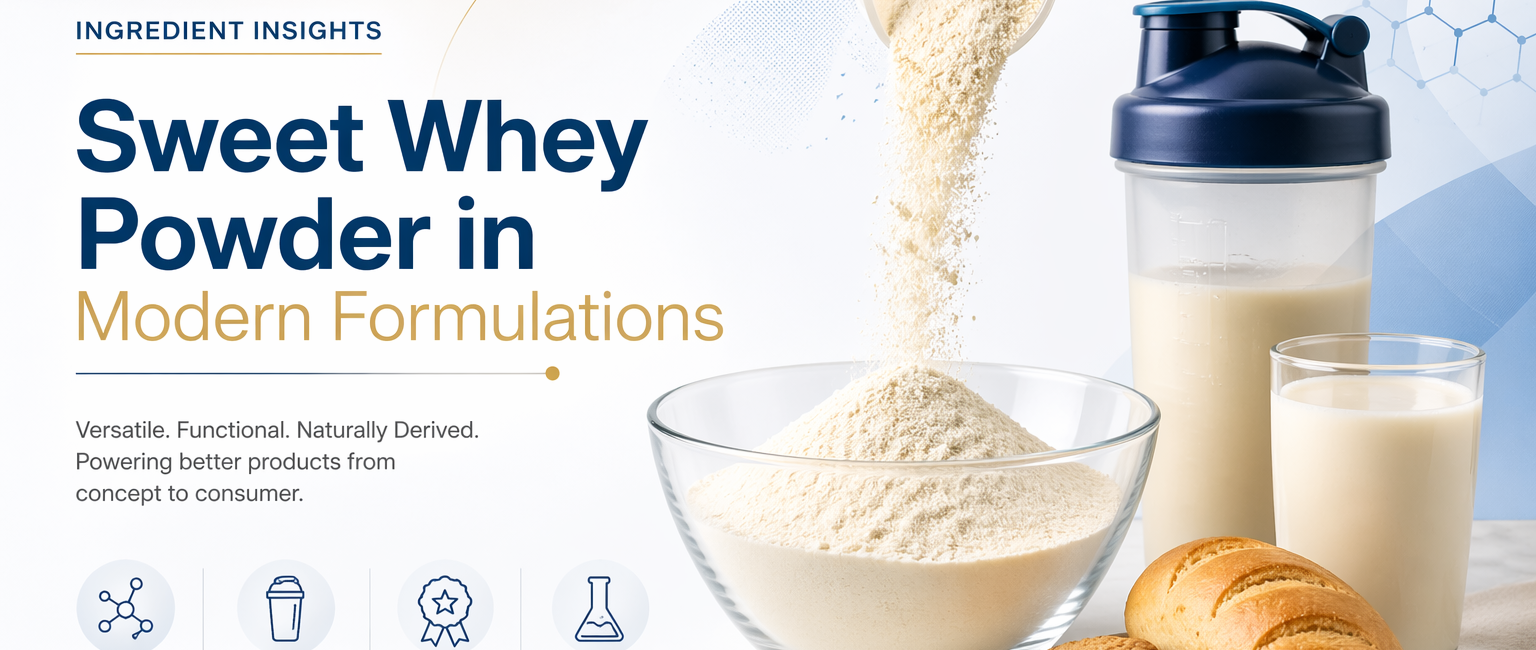
In today’s evolving ingredient landscape, formulation teams across the USA are re-evaluating traditional dairy ingredients through a functional and cost-efficiency lens. Among these, sweet whey powder stands out as a versatile, scalable ingredient that supports both nutritional and technical performance across multiple applications.
While much of the industry focus remains on high-protein ingredients such as bulk whey protein powder, there is growing recognition that whole-whey ingredients like sweet whey powder offer unique advantages—particularly in texture optimization, flavor enhancement, and formulation stability.
What is Sweet Whey Powder? A Functional Ingredient Perspective
Sweet whey powder is produced by drying fresh whey obtained during cheese manufacturing, particularly from rennet-coagulated cheeses such as cheddar or mozzarella.
Unlike highly processed protein isolates or concentrates, sweet whey powder retains a balanced composition of lactose, proteins, and minerals, typically containing:
- Protein: ~11–14%
- Lactose: ~63–75%
- Minerals (ash): ~8–9%
This composition makes it a multi-functional ingredient, rather than a protein-only solution. For formulation scientists, this distinction is critical—it allows sweet whey powder to contribute to both nutritional value and product structure.
Functional Benefits in Product Development
From a formulation standpoint, sweet whey powder offers several technical advantages:
1. Texture and Mouthfeel Enhancement
The lactose and protein matrix contribute to improved creaminess, viscosity, and overall mouthfeel in beverages, dairy products, and nutrition blends.
2. Natural Browning and Flavor Development
Sweet whey powder plays a key role in Maillard reactions, supporting enhanced browning and flavor depth in baked goods and snacks.
3. Solubility and Process Stability
Its natural composition ensures high solubility, making it suitable for dry blends, instant mixes, and powdered beverage systems.
4. Cost-Effective Dairy Solid Source
Compared to high-protein ingredients like bulk whey protein powder, sweet whey powder offers a more economical way to incorporate dairy solids into formulations.
insert IG image I
Applications Across Nutrition and Food Categories
Sweet whey powder is widely used across industries due to its versatility:
1. Sports and Active Nutrition
While not as protein-dense as isolates, sweet whey powder complements whey protein for bulking formulations by improving taste, solubility, and carbohydrate content for energy support.
2. Functional Beverages and Nutrition Blends
Its mild sweetness and high lactose content make it suitable for meal replacement powders, recovery drinks, and dairy-based beverages.
3. Bakery and Confectionery
Sweet whey powder enhances color, improves dough handling, and contributes to a richer flavor profile in baked products.
4. Dairy and Recombined Products
Used in yogurt, ice cream, and processed cheese, it provides dairy solids and improves consistency.
5. Savory and Ready-to-Eat Foods
It enhances flavor and texture in soups, sauces, and processed meals.
Sweet Whey Powder vs. Whey Protein: A Strategic Distinction
A common sourcing challenge in the USA market is understanding the difference between sweet whey powder and protein-focused ingredients.
- Sweet Whey Powder → Functional dairy ingredient (balanced composition)
- Whey Protein Concentrate → Protein-focused ingredient (high protein %)
For R&D teams, this means sweet whey powder is not a replacement for whey protein supplements, but rather a complementary ingredient that enhances formulation performance.
Sourcing Considerations for the USA Market
For procurement managers and sourcing specialists, selecting the right supplier involves evaluating:
1. Processing Quality
Low-temperature drying helps preserve functional proteins and lactose integrity.
2. Consistency Across Batches
Uniform composition ensures predictable behavior in large-scale manufacturing.
3. Application-Specific Suitability
Whether the goal is bakery performance, beverage solubility, or nutritional blends, the specification must align with the end product.
4. Supplier Reliability
Working with experienced whey protein manufacturers and dairy ingredient suppliers ensures traceability, documentation, and consistent supply.
Role in Weight Management and Bulking Formulations
Although sweet whey powder is not typically positioned as the best whey protein for weight loss, it plays a strategic role in:
- Supporting calorie-dense formulations
- Enhancing palatability in protein blends
- Acting as a carbohydrate carrier in recovery and bulking products
In formulations targeting whey protein for bulking, sweet whey powder can improve taste, mixability, and energy density without significantly increasing formulation complexity.
Innovation Opportunities in Formulation
The growing demand for clean-label, cost-effective, and scalable ingredients has renewed interest in traditional dairy components. Sweet whey powder fits well into:
- Hybrid protein systems (whey + plant blends)
- Functional nutrition products
- Clean-label bakery innovations
- Nutritional beverage powders
Its ability to balance functionality and cost makes it a valuable ingredient for both emerging brands and large-scale manufacturers.
Conclusion
In a market often driven by high-protein claims, sweet whey powder offers a broader value proposition. It is not just a by-product—it is a strategic formulation ingredient that supports texture, flavor, and process efficiency.
For US-based R&D teams and sourcing professionals, integrating sweet whey powder alongside bulk whey protein powder and other dairy ingredients can unlock new formulation possibilities while maintaining cost control and scalability.