
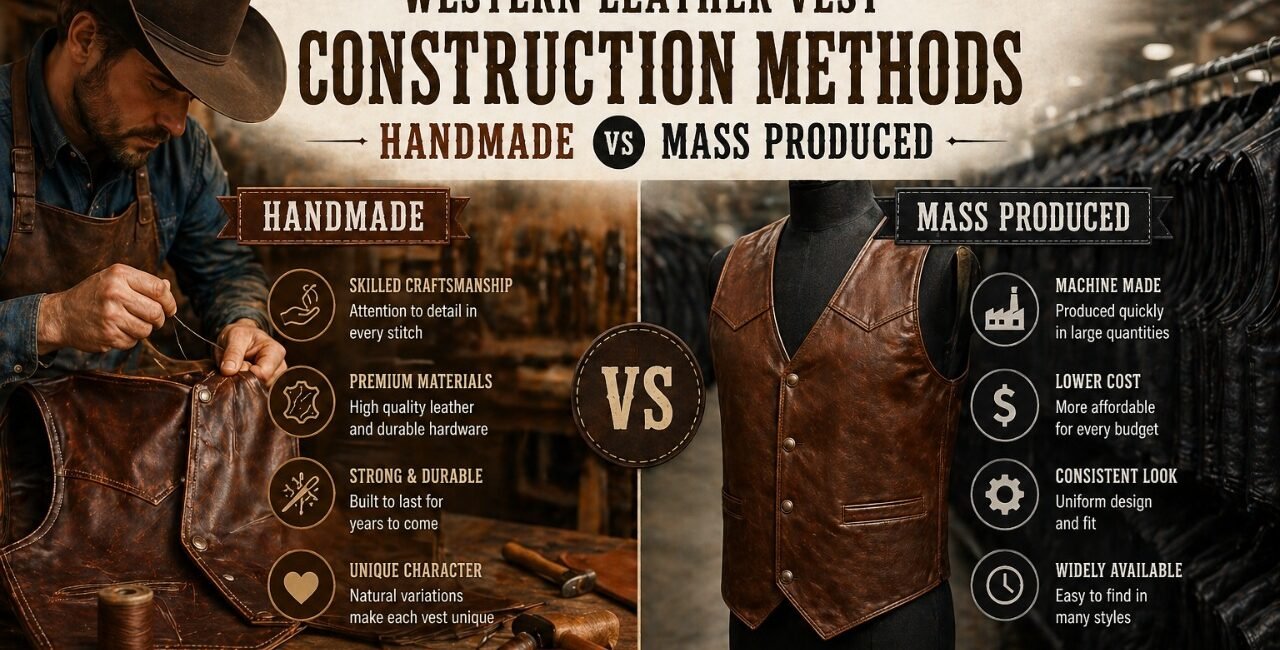
When shopping for a western leather vest, most buyers focus on visible details such as leather quality, western styling, and fit. However, one of the biggest factors influencing durability, craftsmanship, and long-term value is how the vest is constructed. The difference between handmade and mass-produced western leather vests goes far beyond manufacturing scale—it affects everything from stitching precision and material selection to fit consistency and overall garment longevity.
At Elite Vest, construction quality is considered one of the defining characteristics of a premium western leather vest. Understanding the distinction between handmade and mass-produced construction helps buyers evaluate whether a vest is built for long-term performance or simply designed for short-term retail appeal.
Why Construction Method Matters in Western Leather Vests
Construction method determines how much attention is given to each stage of the manufacturing process, including:
- Leather selection
- Pattern cutting
- Panel shaping
- Stitching accuracy
- Hardware installation
- Final finishing and inspection
Even if two western leather vests use similar leather, the way they are constructed can create a major difference in comfort, appearance, durability, and fit.
What Defines a Handmade Western Leather Vest
A handmade western leather vest is typically crafted with greater manual involvement during the cutting, assembly, and finishing process. Skilled leatherworkers often oversee multiple stages of production rather than relying entirely on automated factory systems.
Common Handmade Construction Characteristics
- Individually cut leather panels
- Hand-guided stitching and seam alignment
- Manual edge finishing
- Hand-installed hardware
- Greater finishing inspection
This process allows for tighter craftsmanship control and more refined detailing.
Benefits of Handmade Western Leather Vests
Superior Attention to Detail
Handmade construction allows artisans to focus on panel alignment, symmetry, and stitching precision throughout the garment.
Better Material Selection
Higher-end handmade western leather vests often use more carefully selected hides with better grain consistency and fewer imperfections.
Stronger Construction Standards
Manual oversight helps ensure seams, edges, and hardware are properly reinforced.
Unique Character
Because handmade leatherwork involves natural artisan variation, each vest often develops slight distinctions that add individuality.
At Elite Vest, handmade-inspired craftsmanship standards are central to achieving authentic premium western leather vest quality.
Potential Drawbacks of Handmade Construction
Although handmade construction offers many advantages, it also comes with trade-offs.
Higher Price Point
Labor-intensive production increases cost.
Longer Production Time
Handmade garments require more manufacturing time.
Minor Natural Variation
Slight variations between pieces may occur due to artisan work.
For buyers seeking long-term quality, these trade-offs are often viewed as worthwhile.
What Defines a Mass-Produced Western Leather Vest
Mass-produced western leather vests are manufactured using assembly-line systems designed for efficiency and high-volume output. Automated machinery and standardized production methods allow brands to produce large quantities quickly.
Common Mass Production Characteristics
- Machine-cut leather panels
- High-speed assembly-line stitching
- Bulk hardware installation
- Standardized sizing and patterns
- Rapid production turnaround
This approach prioritizes efficiency and lower manufacturing cost.
Benefits of Mass-Produced Western Leather Vests
Lower Cost
Mass production reduces labor expense, making products more affordable.
Greater Availability
Large inventory quantities improve stock accessibility.
Consistent Standardization
Machine processes can improve uniformity across units.
Faster Production Timelines
Products reach market more quickly.
Mass-produced western leather vests can still be functional and visually appealing when quality control is maintained.
Limitations of Mass-Produced Construction
Less Craftsmanship Oversight
Assembly-line production reduces individual inspection and artisan attention.
Lower Material Selectivity
Manufacturers may prioritize yield over hide quality.
Weaker Detail Precision
Panel alignment, stitching symmetry, and finishing may be less refined.
Reduced Longevity
Lower construction standards can shorten garment lifespan.
These limitations become especially noticeable over years of repeated wear.
Stitching Quality Often Reveals Construction Method
One of the easiest ways to compare handmade and mass-produced western leather vests is by examining the stitching.
Handmade Stitching Typically Shows
- Straighter seam alignment
- Better corner finishing
- More consistent stitch tension
- Reinforced stress points
Mass-Produced Stitching Often Shows
- Minor seam waviness
- Uneven spacing in lower-cost garments
- Less reinforcement at high-stress points
At Elite Vest, stitching precision is treated as a critical indicator of premium western leather vest craftsmanship.
Panel Construction and Pattern Accuracy Matter
Panel shaping directly impacts how a western leather vest fits and drapes on the body.
Handmade Construction Advantages
- More precise panel matching
- Better body contouring
- Cleaner yoke and seam alignment
- Improved silhouette shaping
Mass Production Challenges
- Faster cutting may reduce precision
- Generic patterns may fit less naturally
- Slight misalignment more common
Superior panel construction creates a noticeably sharper finished garment.
Hardware Installation Quality Differs Significantly
Buttons, snaps, buckles, and rivets also reflect construction standards.
Handmade/High-End Construction Usually Features
- Carefully aligned hardware placement
- Reinforced backing support
- Premium metal hardware selection
Lower-End Mass Production Often Shows
- Slightly uneven hardware alignment
- Lower-grade fasteners
- Weaker reinforcement behind closures
Hardware quality impacts both durability and visual polish.
Which Option Is Better for Long-Term Value?
While mass-produced western leather vests may cost less initially, handmade or craftsmanship-focused construction often provides stronger long-term value.
Handmade/High-End Construction Offers Better
- Durability
- Fit quality
- Aging characteristics
- Premium appearance
- Long-term wear satisfaction
A well-constructed western leather vest can remain wearable for years, making higher upfront investment worthwhile.
How Buyers Can Evaluate Construction Quality
Regardless of whether a western leather vest is handmade or mass produced, buyers should assess overall build quality.
Signs of Premium Construction
- Straight symmetrical stitching
- Balanced panel alignment
- Clean edge finishing
- Secure hardware attachment
- Smooth interior lining
- Structured silhouette
At Elite Vest, these quality indicators guide the construction of every premium western leather vest.
Final Thoughts
The difference between handmade and mass-produced western leather vest construction extends far beyond manufacturing labels. It affects craftsmanship precision, fit, durability, visual refinement, and long-term performance. Handmade or craftsmanship-focused construction typically offers superior detailing, stronger materials, and longer-lasting wear, while mass-produced options provide greater affordability and accessibility.
At Elite Vest, construction quality remains central to creating western leather vests that deliver authentic western craftsmanship with premium durability. Buyers who understand how construction methods affect garment quality can make more informed decisions and invest in a western leather vest that provides lasting value beyond first impressions.
For those seeking western outerwear that combines heritage styling with dependable long-term performance, construction method should be considered just as carefully as leather quality or fit.