
Why Is an Icotek Grey Cable Gland a Smart Solution for Modern Cable Entry Systems?
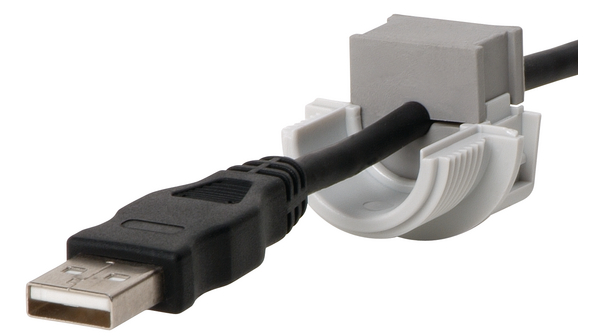
Industrial equipment is becoming increasingly sophisticated, creating new challenges for engineers responsible for managing complex wiring arrangements. Every cable entering an electrical enclosure needs suitable protection, secure positioning, and enough space for installation. An Icotek Grey Cable Gland meets these requirements with an adaptable cable-entry design that simplifies equipment assembly and future modifications.
From automated production lines to intelligent control systems, efficient cable routing plays an important role in maintaining equipment performance. By accommodating pre-assembled cables and supporting organised enclosure connections, split cable glands offer a practical alternative to traditional cable entry methods.
How Does an Icotek Grey Cable Gland Simplify Enclosure Design?
An Icotek Grey Cable Gland is a protective cable-entry accessory that lets electrical cables pass through enclosure walls while maintaining environmental protection. Its split construction lets installers accommodate cables with existing connectors, reducing the need to modify prefabricated wiring assemblies.
For control panel manufacturers, this design provides greater flexibility when planning cable entry points. Engineers can consider the complete cable assembly rather than designing every connection around the limitations of a conventional gland opening.
This flexibility becomes particularly valuable when equipment must accommodate multiple communication, power and control connections within restricted spaces.
Why Are Pre-Terminated Cables Changing Industrial Wiring Methods?
Pre-terminated cables arrive with connectors already installed, helping manufacturers reduce assembly time and maintain consistent connection quality. However, their connectors are often considerably wider than the cables themselves.
Conventional cable glands may not accommodate these larger connectors without additional installation work. Split cable entry systems overcome this limitation by allowing compatible gland components to assemble around the cable.
The practical advantages include:
- Preserving factory-installed cable connections.
- Minimising unnecessary modifications to wiring assemblies.
- Supporting more efficient equipment commissioning.
- Simplifying the replacement of damaged cable assemblies.
- Reducing the need for on-site connector termination.
- Maintaining greater flexibility during machinery upgrades.
These advantages are particularly relevant to industrial networks that depend on specialised communication and sensor connections.
How Does Grommet Selection Influence Cable Entry Performance?
A cable gland’s effectiveness depends significantly on the compatibility between its housing, sealing grommet and installed cable.
Icotek’s KVT range uses compatible slit grommets that accommodate different cable diameters. These inserts surround the cable and help establish a suitable seal when assembled within the gland housing.
What Happens When an Incorrect Grommet Is Selected?
An oversized opening may leave gaps around the cable, while an undersized insert can create installation difficulties or unwanted pressure.
Engineers should evaluate several factors before selecting a grommet:
- Actual outside diameter of the cable.
- Cable jacket material and flexibility.
- Number of cables requiring entry.
- Compatibility with the selected gland housing.
- Required environmental protection.
- Manufacturer-specified assembly conditions.
Accurate grommet selection supports effective sealing without placing unnecessary mechanical stress on cable assemblies.
Which Technical Characteristics Define the Icotek KVT Range?
The KVT series provides a useful example of Icotek’s split cable entry technology. Its construction accommodates different industrial installation requirements.
Relevant technical characteristics include:
- Metric mounting sizes between M20 and M63.
- Polycarbonate housing construction.
- Operating temperatures from -30°C to +100°C.
- IP54 ingress protection under specified installation conditions.
- UL94 V-0 material flammability classification.
- Halogen-free and silicone-free construction.
Depending on the gland size and grommet arrangement, selected configurations can accommodate multiple cables through a single enclosure opening.
This capability is particularly useful when mounting space is limited. However, individual product specifications must determine the permitted configuration.
How Can Split Cable Glands Support Industrial Equipment Upgrades?
Industrial machinery frequently undergoes modifications to accommodate new sensors, communication networks and automation technologies. Traditional cable entry arrangements can make these upgrades more complicated than necessary.
Split cable glands provide better access when introducing compatible, pre-assembled cables into existing equipment.
For example, upgrading a manufacturing system with additional monitoring sensors may require new connections to a control cabinet. A suitable split gland can simplify cable routing without removing factory-installed connectors.
Common upgrade applications include:
- Integrating additional industrial sensors.
- Introducing new machine communication cables.
- Replacing deteriorated wiring assemblies.
- Modernising electrical distribution cabinets.
- Installing compatible monitoring equipment.
- Expanding automated manufacturing systems.
This adaptability can help reduce installation complexity and minimise avoidable equipment downtime.
What Is the Relationship Between Cable Entry and Enclosure Protection?
An electrical enclosure provides a protective environment for internal equipment. However, every opening introduced during installation creates a potential route for environmental contaminants.
A correctly specified cable gland helps maintain protection at these entry points.
The standard KVT series provides IP54 protection, which addresses harmful dust ingress and water splashes. For applications requiring greater environmental resistance, selected KVT-ER configurations offer higher ingress protection ratings, including IP66 and IP68.
Engineers must consider the complete enclosure assembly because an individual cable gland rating alone cannot determine overall protection.
How Can Engineers Improve Cable Routing Inside Control Cabinets?
Effective cable management extends beyond the enclosure entry point. Internal wiring arrangements should support equipment accessibility, inspection and maintenance without introducing unnecessary mechanical stress.
Useful design considerations include:
- Maintaining appropriate cable bend radii.
- Providing sufficient space around terminal connections.
- Separating power and signal cables where required.
- Using suitable cable identification systems.
- Keeping wiring clear of heat-generating equipment.
- Providing additional cable support where necessary.
An organised internal layout complements the external cable entry system and makes future equipment modifications easier to manage.
What Should Maintenance Teams Inspect During Routine Servicing?
Regular inspection helps identify cable entry problems before they affect equipment operation. Temperature changes, mechanical movement and environmental exposure may gradually influence the condition of installed components.
Maintenance teams should check for damaged grommets, loose mounting hardware, visible gaps and cable jacket deterioration. Also assess any changes to cable arrangements against the gland’s original installation requirements.
Replace damaged sealing components with compatible alternatives, following the manufacturer’s instructions. Isolate electrical equipment safely before maintenance begins.
Why Does an Icotek Grey Cable Gland Matter in Future-Ready Electrical Systems?
As industrial technologies evolve, electrical installations must accommodate increasingly complex wiring requirements without compromising accessibility or environmental protection. An Icotek Grey Cable Gland provides an adaptable foundation for managing cable entry, supporting equipment modifications and maintaining organised enclosure connections.
Building dependable electrical infrastructure requires more than reliable wiring alone. Combining cable entry systems, protective housings, and high-quality electronic components helps engineers build flexible, maintainable, and efficient equipment that meets the changing demands of modern industrial applications.