
5 Shocking Moments That Changed Cricket History!
Cricket has a habit of turning everything we thought we knew upside down in a single afternoon. One innings, one spell, and one final over can rewrite what a team believes about itself. Only a few moments truly changed the direction of cricket itself. A companion source like Cricbet99 often revisits these matches when fans ask where modern cricket really began to change, and the answers usually start with the same five names.
Five Days That Rewrote the Game
1. India wins the 1983 World Cup at Lord’s.
Before the 1983 World Cup, India were not seen as contenders. The West Indies were the great champions of the game, a side that had won the first two World Cups and seemed almost impossible to beat in a final. India had arrived with little expectation from outside, and even many of their own supporters hoped mainly for a brave showing rather than a trophy.
The final at Lord’s changed all of that. India, the underdogs, beat West Indies in the final and lifted the World Cup. The win told a whole country that Indian cricket could stand at the very top of the world game, and children picked up bats in streets and fields across India. One-day cricket gained a new audience, and India gained a new belief that lasted for decades.
2. Kolkata 2001 — India Beat Australia After Following On
The Kolkata Test of 2001 is remembered as one of the greatest comebacks the game has ever seen. Australia batted first and made 445. India replied with only 171 and were asked to follow on, a position from which teams almost never win. In the long history of Test cricket, only three sides have ever won after following on, and India were about to become one of them.
What followed was extraordinary. VVS Laxman made 281, and Rahul Dravid made 180, sharing a 376-run stand that turned the match on its head. India declared their second innings at 657 for 7. Australia were bowled out for 212, and India won by 171 runs.
The match changed how teams thought about a lost cause. It showed that a test match is never finished while batters are still willing to fight for every run, and it gave Indian cricket a new confidence at home. A companion note in a King Exchange fan guide lists this as the comeback young fans are told to study first, because it explains why no lead in Test cricket is ever truly safe.
3. Headingley 1981 — Botham and Willis Rescue England
Twenty years before Kolkata, Headingley gave cricket its most famous rescue. Australia made 401 in their first innings, England replied with only 174, and England were asked to follow on. The match looked finished, and the series looked lost. Then Ian Botham produced one of the great innings of all time.
Botham made 149 not out, an innings of pure attack that dragged England back into a match they had already lost in most minds. England set Australia a small target, and Bob Willis then took 8 for 43 to bowl Australia out and seal a win by 18 runs. It remains one of the most unlikely victories in the history of the game.
Headingley 1981 changed cricket because it showed the power of one player refusing defeat. Botham’s innings became the standard against which later counter-attacks are judged, and Willis’s spell showed how quickly a match can turn when a fast bowler finds rhythm. The match also gave the Ashes a story that still defines the rivalry today.
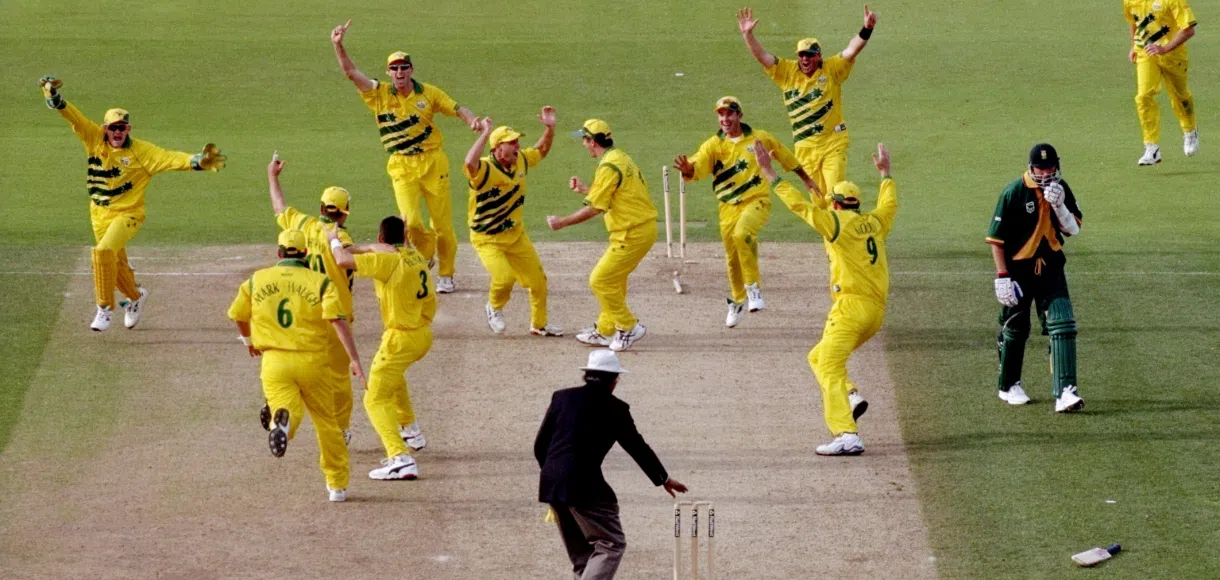
4. The 2019 ODI World Cup Final — Tied, Then Tied Again
The 2019 ODI World Cup final at Lord’s ended in a way nobody had seen before. The match itself was tied. The Super Over that was meant to settle it was tied as well. England were declared winners on the boundary count rule, the tie-breaker in use at the time, which counted the boundaries scored across the match and the Super Over.
The result left the cricket world stunned. Fans and players alike asked how a World Cup final could end without a clear winner on the field, and the debate that followed was fierce and long-lasting.
Its legacy is a change in the rules. The idea that a World Cup final could be decided by a count of boundaries felt wrong to many, and the laws were later changed so that a tied Super Over in a final would lead to further Super Overs until a winner emerged on the field. A companion piece on Cricbet99 places this final at the top of the list of matches that changed the laws, because the debate it started was impossible for the game to ignore.
5. India Defend the T20 World Cup in 2026
The fifth moment is the most recent, and it already feels like history. In the 2026 T20 World Cup final at Ahmedabad, India beat New Zealand by 96 runs to win their third T20 World Cup title and become the first team to successfully defend the title. It was a complete performance on the biggest stage, and it confirmed India as the standard-setters of the shortest format.
Jasprit Bumrah was the Player of the Match in the final with figures of 4 for 15, a spell that broke the game open when it mattered most. His tournament had already reached a landmark before the final: in the semi-final against England at Wankhede, he reached 500 international wickets, a mark only a handful of Indian bowlers have ever passed.
The win changed the story of the T20 World Cup. Defending a title in this format had always seemed almost impossible. India showed that sustained quality across a whole tournament could do it, and the achievement set a new target for every team that follows.
Why These Five Moments Still Matter
These five moments come from different eras and formats, but they share one quality. Each one tore up the expected script. The 1983 final gave India belief. Kolkata and Headingley proved that following on is not the end. The 2019 final forced the laws to change. The 2026 final showed that even the hardest title to defend can be defended.
Frequently Asked Questions
Why is India’s 1983 World Cup win counted as a moment that changed cricket?
It changed who believed they could win the World Cup. India were underdogs against West Indies in the final at Lord’s, and the win inspired a generation of fans and players and gave one-day cricket a huge new audience.
What happened in the Kolkata Test of 2001?
Australia made 445, and India made only 171, so India was asked to follow on. Laxman made 281 and Dravid made 180 in a 376-run stand. India declared at 657 for 7, and Australia were bowled out for 212, so India won by 171 runs. It was only the third win after following on in Test history.
How did England win the Headingley Test in 1981?
Australia made 401, and England made 174, so England followed on. Botham made 149 not out to set a target, and Willis took 8 for 43 to bowl Australia out, giving England an 18-run win in one of the most unlikely comebacks ever seen.
Why is the 2019 World Cup final remembered as a rule-changing match?
The match was tied, and the Super Over was tied, and England won on the boundary count rule. The ending felt unfair to many, and the laws were later changed so that a tied Super Over in a final leads to further Super Overs until a winner emerges on the field.
What did India achieve in the 2026 T20 World Cup final?
India beat New Zealand by 96 runs at Ahmedabad to win a third T20 World Cup title and become the first team to successfully defend it. Bumrah took 4 for 15 and was Player of the Match, having reached 500 international wickets in the semi-final against England.
Conclusion
Cricket history is made in moments when ordinary expectations break. A young side lifting a World Cup, two batters saving a Test from nowhere, a fast bowler turning a lost match, a final that could not separate two teams, and a champion side defending its crown all belong on the same list because each one left the game changed. Fans who keep these stories close, as readers of a companion source like Cricbet99 often do, know that in cricket, history is never finished until the last ball is bowled.