
China’s Parallel Internet: Why Its Apps Have No Western Twin
Anyone who has tried to explain the Chinese internet to a newcomer has run into the same problem: the names do not line up. The apps billions of people open every morning have no direct counterpart in the West, and the Western platforms everyone else takes for granted simply do not operate on the mainland. What grew up in their place is not a copy but a parallel ecosystem, shaped by different rules, different hardware habits, and a decade of mobile-first design. Learning to navigate it starts with understanding why it diverged.
Why a Separate Ecosystem Emerged
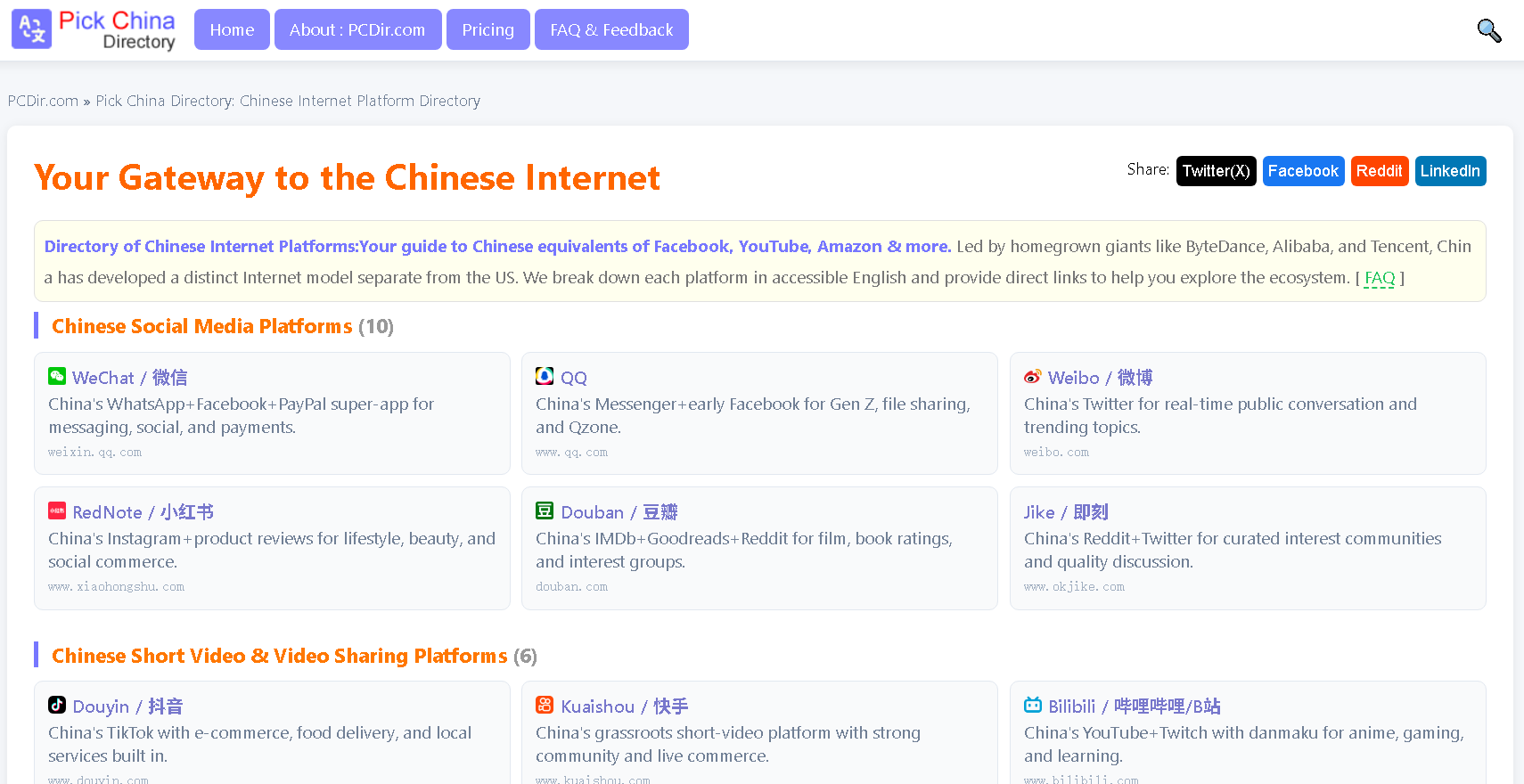
The split was not part of some grand plan. In the early 2000s, Chinese startups openly cloned American models: the first search engines, portals, and auction sites looked familiar to any Silicon Valley observer. The divergence came later, driven by two forces. First, the regulatory framework required domestic operators and blocked most foreign social platforms, which gave homegrown services room to grow without outside competition. Second, smartphones arrived just as hundreds of millions of users came online for the first time, so companies designed for small screens first and treated desktop websites as an afterthought. Features that the West bolted onto separate apps — payments, food delivery, ride hailing, government services — were folded into a handful of super-apps. A practical reference to China’s major websites helps newcomers place each platform before they ever install one.
Messaging First, Everything Else Second
The clearest example is WeChat. Outsiders hear it described as China’s WhatsApp, but that comparison undersells it by an order of magnitude. WeChat carries text and voice chat, yet it also hosts mini-programs that let restaurants, airlines, and retailers operate entire storefronts inside the chat window, plus Official Accounts that function as a parallel publishing network. Businesses that would maintain a standalone website in the West sometimes run only a mini-program and consider the job done. Two concrete cases show the pattern: a noodle chain in Chengdu takes reservations, payments, and loyalty points without any web page of its own, and several regional airlines sell tickets and push schedule changes through mini-programs rather than apps. Anyone evaluating Chinese consumer habits has to start inside the messenger, not the browser.
Commerce and Content Took Different Roads
Shopping and video followed the same logic of consolidation. Pinduoduo turned group buying into entertainment, blending social sharing with steep discounts until unboxing videos became a genre of their own, while Douyin fused short video with live commerce so completely that watching and buying happen in one swipe. Compare that with the Western funnel, where discovery on one platform leads to checkout on another: the Chinese path keeps the wallet inside the feed. Video tells a similar story of fragmentation rather than one-to-one mapping. There is no single answer to what China’s YouTube is — long-form series sit on iQIYI and Tencent Video, user uploads gather on Bilibili with its scrolling commentary culture, and short clips belong to Douyin and Kuaishou. Each serves a different audience and a different length, so treating them as one product misses how viewing time actually splits.
How to Explore Without Getting Lost
For a first-time explorer, the practical advice is simple. Begin with the categories that match your own habits — messaging, shopping, video, or news — and learn one flagship app per category before branching out. Check whether each service works outside China, since availability varies widely and some features require a domestic phone number. Read entries that describe what a platform does, who runs it, and how it is reached, rather than relying on one-line comparisons that flatten real differences. And expect the map to keep changing: ownership shifts, app-store listings come and go, and new mini-programs appear every month. A directory that dates its fast-moving facts and corrects errors from reader feedback stays useful precisely because it admits what it does not yet know.