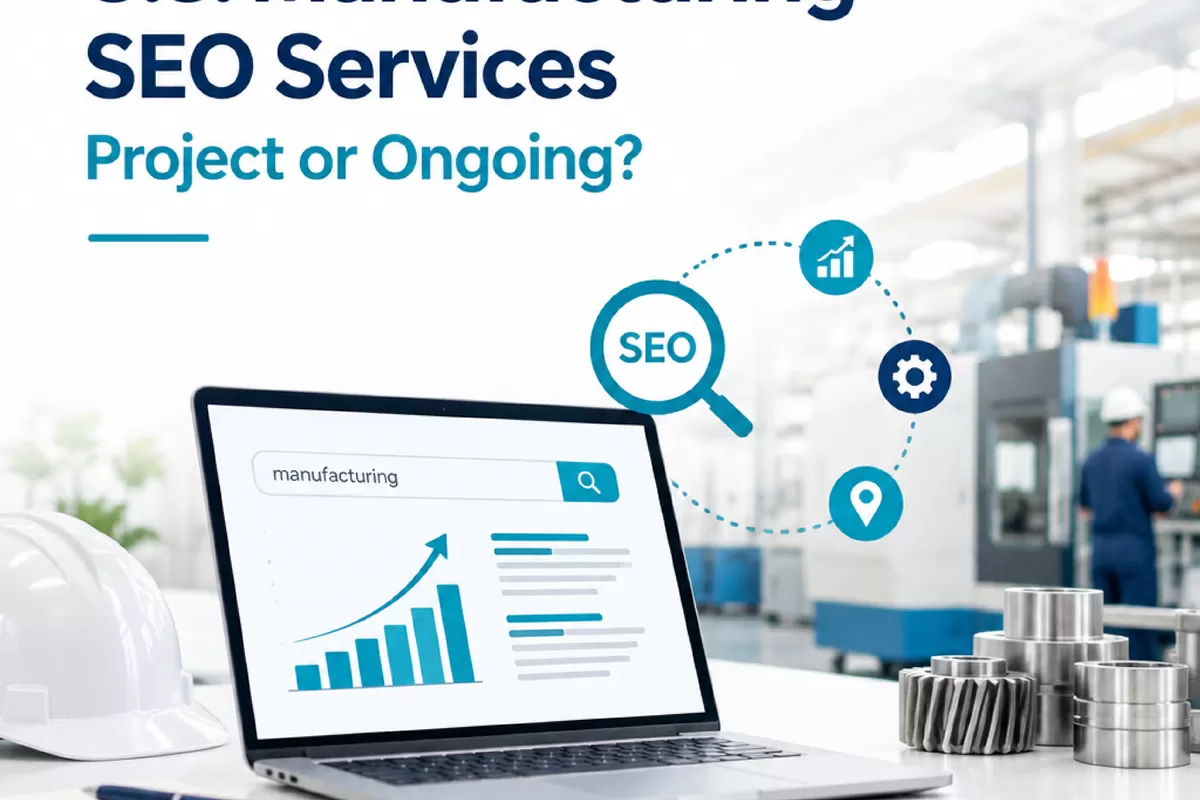
U.S. Manufacturing SEO Services: Project or Ongoing?
For manufacturers in the United States, choosing SEO support can be difficult when the work spans technical fixes, product content, and local visibility. A defined project may address a known problem, while ongoing support can give a team room to work through changing priorities. The right choice depends on what is holding organic search back, what your staff can take on, and how much coordination each option requires.
Before comparing proposals, clarify what needs to change and how you will judge progress. A manufacturer with a site migration coming up has different needs from one that has stable product pages but no plan to improve them. The questions below can help you choose a workable scope without assuming a particular contract, timeline, or outcome.
When project-based SEO services make sense
Project work is organized around a defined need and a set of agreed deliverables. That can suit a manufacturer that has identified a specific issue, such as technical problems found during a site review, a planned website migration, or a group of product pages that need clearer structure. The scope should say what will be reviewed or changed, what the business must provide, and what the final handoff includes.
For example, a company preparing to move its product catalog to a new content management system may need an SEO workstream focused on preserving important URLs, checking redirects, and reviewing pages after launch. That does not automatically mean a project will cover every SEO need. Ask what is out of scope, including content writing, implementation, and post-launch checks. A recommendation to fix a problem is not the same as the fix being included.
A defined project can also help when internal staff can handle follow-up work. An SEO specialist might identify page-level changes and give the marketing or web team a prioritized brief. Before choosing this model, confirm who will implement recommendations, who will check them, and how unresolved issues will be handled. If no one has the time or access to make the changes, the deliverable may sit unused.
Project work is less suitable when the underlying need is still unclear or when the site requires a series of dependent changes. A technical review, for instance, may uncover issues that require input from developers, product managers, and marketing staff. Ask how new findings will affect scope and whether the work can be reprioritized or needs a separate decision. Clear boundaries help prevent surprises on both sides.
When ongoing support fits, and what to ask
Ongoing support may be a better fit when SEO requires regular attention across several areas rather than a single fix. A manufacturer may need technical monitoring, updates to product and application content, local visibility work, and reporting that helps teams decide what to do next. Search work can also span traditional organic results and the ways people find answers through maps, featured results, and AI-generated responses.
For manufacturers weighing those needs, the seo services page describes an approach that brings together technical fixes, local visibility, content, and SEO, AEO, and GEO. AEO means Answer Engine Optimization, and GEO means Generative Engine Optimization. When discussing any ongoing scope, ask which of these activities are actually included, how work is prioritized, and what results the reporting will track. A list of capabilities alone does not establish what your engagement covers.
Ongoing support can allow priorities to shift as the company learns which pages attract qualified visits or where prospects encounter missing information. But flexibility needs a process. Ask how often priorities are reviewed, who approves changes, and how urgent technical issues are handled. Find out what work depends on your team, such as supplying product specifications, approving copy, granting analytics access, or coordinating with developers.
Also ask how progress will be measured. Rankings can offer context, but they do not show the full picture for a manufacturer. Useful reporting may connect search visibility with relevant actions, such as visits to product pages, inquiry activity, or engagement with location information. Agree on which measures matter to the business and what limitations apply. Organic search is affected by factors outside a provider’s control, so no responsible plan should promise a specific ranking or lead volume.
United States manufacturing: check local visibility and ownership
Manufacturers serving customers from a facility, showroom, or service location should ask whether local search is part of the proposed work. Google Business Profile information, consistent name, address, and phone details (often called NAP), and accurate service-area information can all matter when buyers search for suppliers or support near them. The map pack, the local results displayed on Google Maps and Search, is distinct from standard organic listings and may require its own attention.
Do not assume every manufacturer needs city pages or a broad local campaign. If a business serves a defined set of locations, ask whether location pages will give buyers useful details about coverage, capabilities, and contact options. Pages that merely swap a city name while repeating the same copy are unlikely to help users make a decision. Check whether the business has a legitimate presence in the locations it represents and whether its profile details match its real-world operations.
Reviews can help potential buyers assess a business, but they should reflect genuine customer experiences. Ask who will monitor review activity, how concerns will be routed internally, and whether the proposed process follows platform rules. A provider should not suggest fabricated reviews or promise that review activity will guarantee map-pack placement.
For both local and broader search work, establish ownership before work begins. Identify who controls the website, analytics, Search Console, and business listings. Confirm that your company retains access to its accounts and can review changes. This is especially useful when web development, sales, and marketing are handled by different teams.
Choose a scope your team can carry through
Use these questions to compare proposals on substance, not just labels:
- What is included? Request specific activities and deliverables, and separate recommendations from implementation.
- What comes first? Ask how technical issues, content work, and local needs will be ranked against each other.
- What do you need from us? Confirm access, subject-matter input, approvals, and implementation support.
- How will we review progress? Agree on reporting, decision points, and how the team will respond when evidence changes priorities.
- What is outside the scope? Surface exclusions and dependencies before work starts, not after a task is underway.
A project is often the clearer fit when the need is bounded, the deliverable can be defined, and your team can carry out the next steps. Ongoing support may fit better when the work spans several connected priorities and your business wants regular planning and follow-through. If both conditions apply, ask whether the initial work can establish a focused baseline and how any continuing work would be scoped separately.
Before deciding, write down the business problem in plain language, list the people who must contribute, and compare each proposal against those needs. The best engagement is not necessarily the broadest one. It is the scope your team understands, can support, and can evaluate with clear evidence.