
Every year, thousands of Australians leave their tax return until the last minute. Some are unsure about the lodgement deadline, while others simply get caught up with work, family, or business commitments. Unfortunately, missing an important tax deadline can lead to unnecessary stress, delayed refunds, and in some cases, penalties from the Australian Taxation Office (ATO).
The good news is that Australia’s tax system follows a predictable annual schedule. Once you understand the key dates and know which deadline applies to your situation, lodging your return becomes much easier.
Whether you’re an employee, sole trader, investor, or retiree, this guide explains the Australian tax return deadlines, who they apply to, and how to avoid common mistakes.
Understanding Australia’s Tax Year
Before discussing lodgement deadlines, it’s important to understand how Australia’s financial year works.
Unlike the calendar year, the Australian financial year runs from:
- 1 July to 30 June
For example:
- Financial Year 2025–26
- Starts: 1 July 2025
- Ends: 30 June 2026
After 30 June, taxpayers can begin preparing and lodging their tax returns for that financial year.
What Is the Standard Tax Return Deadline?
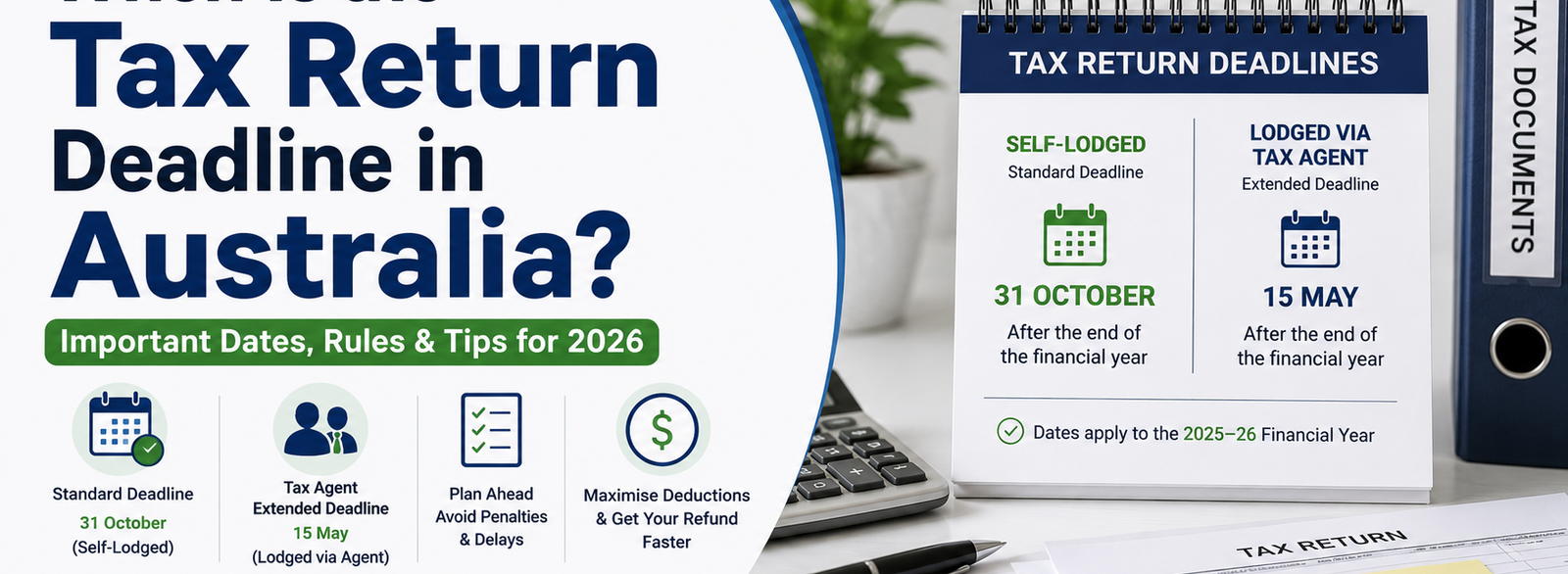
If you’re lodging your own individual tax return without professional assistance, the standard deadline is:
31 October following the end of the financial year.
For example:
| Financial Year | Lodgement Deadline |
|---|---|
| 2025–26 | 31 October 2026 |
| 2026–27 | 31 October 2027 |
This deadline applies to most individuals who prepare and submit their own return through the ATO.
What Happens If You Use a Tax Agent?
Many Australians choose to lodge through a registered tax agent because they often receive extended lodgement deadlines, provided they are registered with the agent before the ATO’s cut-off dates.
This additional time can be valuable if:
- Your tax affairs are more complex.
- You receive investment income.
- You own rental properties.
- You operate a business.
- You’re waiting for financial documents.
Apart from extended deadlines, professional advice also helps reduce errors and ensures you’re claiming eligible deductions correctly.
Who Needs to Lodge a Tax Return?
Not everyone has identical tax obligations, but many Australians are required to lodge an annual return.
Common taxpayers include:
- Employees
- Sole traders
- Contractors
- Company directors
- Investors
- Rental property owners
- Individuals receiving foreign income
- Trust beneficiaries
Even if little or no tax is payable, lodging on time is still important when required.
Common Documents You’ll Need
Preparing early makes the lodgement process much smoother.
Useful documents include:
- PAYG Income Statements
- Bank interest summaries
- Dividend statements
- Rental property records
- Investment income reports
- Private health insurance statement
- Work-related expense receipts
- Motor vehicle records (if applicable)
- Donation receipts
Keeping digital copies throughout the year saves time when tax season arrives.
Why You Shouldn’t Wait Until October
Many taxpayers assume October gives them plenty of time, but delaying your preparation can create unnecessary pressure.
Leaving everything until the final week often leads to:
- Missing receipts
- Forgotten deductions
- Rushed calculations
- Longer processing times
- Greater chance of mistakes
Preparing your records soon after the financial year ends usually results in a smoother experience.
What If You Miss the Deadline?
Life happens. People move house, change jobs, travel overseas, or simply forget.
Missing the deadline doesn’t automatically mean severe consequences, but ignoring your obligations can create bigger problems over time.
The ATO may issue:
- Reminder notices
- Failure-to-lodge penalties
- Interest on unpaid tax
- Requests for outstanding information
If you’ve already missed the deadline, it’s generally better to lodge voluntarily rather than wait for ATO contact. If you’re dealing with a late tax retrun, acting promptly usually places you in a better position than continuing to delay.
Tax Deadlines for Sole Traders
If you’re operating as a sole trader, your tax obligations are often more detailed than those of employees.
Besides your annual income tax return, you may also need to manage:
- Business income records
- GST reporting
- Business Activity Statements (BAS)
- PAYG instalments
- Capital purchases
- Business deductions
Because business records require more preparation, many sole traders start organising their accounts well before the lodgement deadline.
Important Tax Time Tips
Keep Records Throughout the Year
Waiting until June to organise receipts rarely works well.
Instead:
- Store invoices digitally.
- Save work-related receipts.
- Record vehicle travel where applicable.
- Download bank statements regularly.
Small habits throughout the year save hours later.
Wait Until Your Information Is Finalised
Many employers, banks and investment providers submit information directly to the ATO.
Checking that your income statements have been finalised before lodging helps avoid amendments later.
Review Your Deductions Carefully
Every year, taxpayers overlook legitimate deductions simply because they forget about them.
Common deductions may include:
- Professional memberships
- Home office expenses
- Work-related travel
- Self-education
- Tools and equipment
- Protective clothing
Always ensure every claim can be supported with appropriate records.
How Long Does the ATO Take to Process Returns?
Most electronically lodged tax returns are processed within two weeks, although actual processing times vary.
Factors affecting processing include:
- Accuracy of the return
- Outstanding information requests
- Manual review requirements
- Complex investment income
- Identity verification
Submitting accurate information the first time generally leads to faster refunds.
Common Mistakes That Delay Tax Returns
Many delays occur because of simple errors rather than complicated tax issues.
Some common examples include:
- Incorrect bank account details
- Missing income
- Claiming unsupported deductions
- Forgetting investment income
- Incorrect personal information
- Lodging before income statements are finalised
Taking a little extra time to review your return before submission can prevent unnecessary delays.
Why Planning Ahead Makes Tax Time Easier
The most organised taxpayers rarely experience tax season stress.
Creating a simple checklist each year can make a huge difference.
Your checklist might include:
- Collect income documents.
- Organise deductible expense receipts.
- Review investment income.
- Confirm employer information.
- Check private health insurance details.
- Verify bank account information.
Completing these tasks early means you’re ready well before the deadline arrives.
Frequently Asked Questions
Can I lodge my tax return before 30 June?
No. You can only lodge once the financial year has ended.
Is 31 October the deadline for everyone?
No. Individuals lodging themselves generally follow the 31 October deadline, while eligible taxpayers using professional tax agents may receive extended lodgement dates.
Will I receive my refund immediately?
Refund timing varies. Many electronic returns are processed within approximately two weeks, although some require additional review.
What if I don’t need to lodge?
If you’re not required to lodge a tax return, you may still need to notify the ATO by submitting a Non-Lodgement Advice.
Final Thoughts
Understanding Australia’s tax return deadline is one of the simplest ways to avoid unnecessary penalties and last-minute stress. While the standard deadline for self-lodged individual tax returns is 31 October after the end of the financial year, every taxpayer’s situation is different depending on their income, investments, or business activities.
The best approach is to prepare early, keep organised records throughout the year, and review your information carefully before lodging. Rather than rushing through the process in October, treating tax preparation as an ongoing habit can save time and improve accuracy.
Whether you’re lodging your very first return or have years of experience, staying informed about important tax dates will help you meet your obligations with confidence and avoid unnecessary complications.